
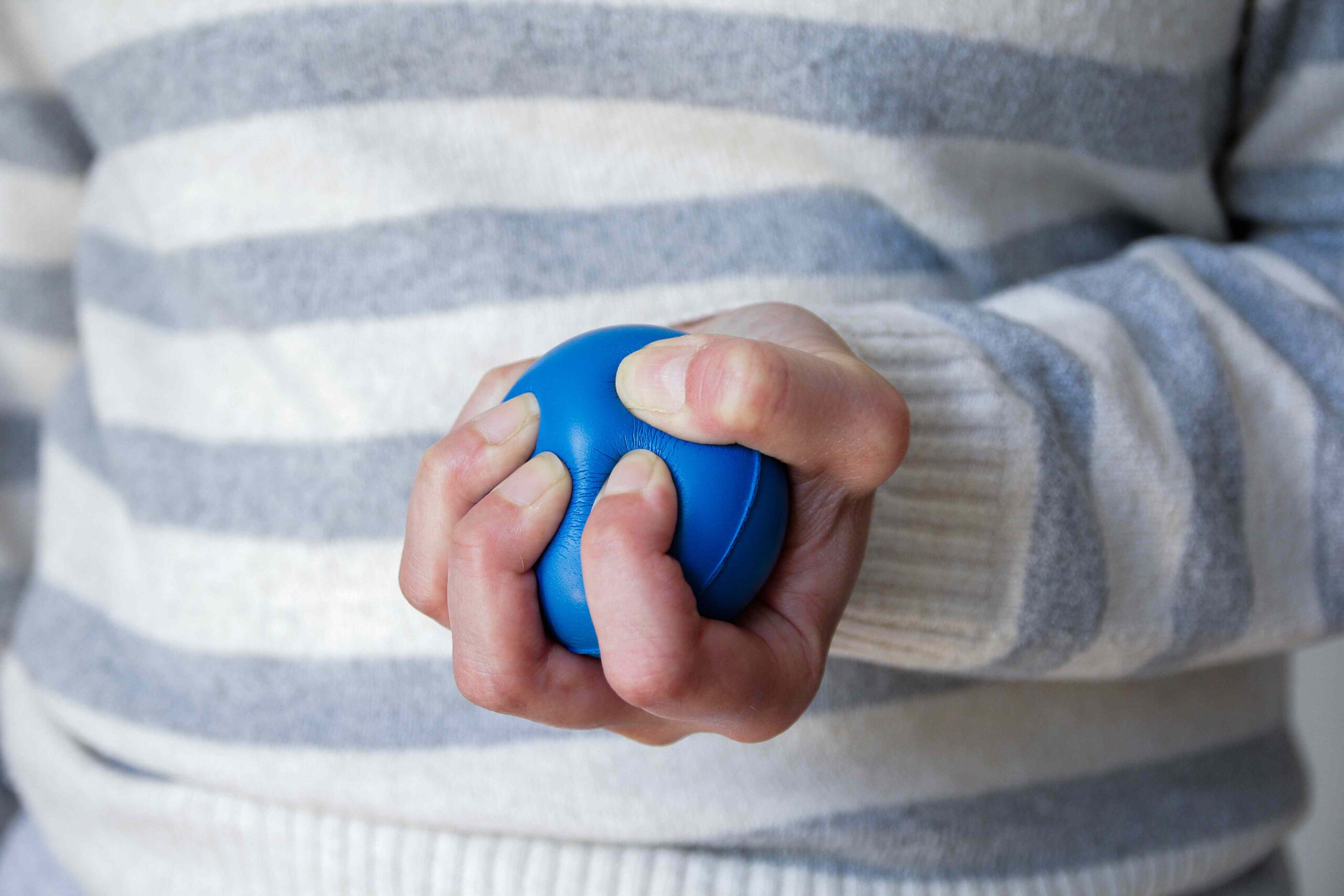
Grip strength is a powerful indicator of healthy aging, linked to everything from cognitive function and heart health to overall lifespan. While it’s often considered a proxy for overall strength and fitness, there are also standalone reasons to focus on hand strength, such as maintaining mobility and independence as you age, whether it’s opening a jar or using tools. Here are five practical ways to improve grip strength so you can complete daily tasks with ease for years to come.
Targeted grip exercises such as hand grippers, stress balls or towel squeezes can improve two key aspects of hand strength: crush strength, the maximum force produced by squeezing your fingers against your palm, and endurance, or the ability to sustain effort over a long period of time, according to Grayson Wickham, DPT, CSCSA physical therapist.
Wickham suggests performing two to four short sets of grip work two to four days per week. Squeeze as hard as you can for 5 to 10 seconds or complete 10 to 20 controlled repetitions, stopping one to two repetitions before failure to avoid unnecessary stress on your tendons.
“For older adults, start with a very easy resistance and gradually build up, because the limiting factor is often connective tissue tolerance, not muscle,” Wickham said. “If you have arthritis, prioritize pain-free range of motion.”
2. Lifting weights
strength training Grip strength can be significantly improved, Wickham said. “When the entire system becomes stronger, grip improves rapidly as the nervous system learns to recruit more muscles and the forearms adapt to larger movement patterns,” he explains.
Wickham recommends using free weights like dumbbells, barbells or kettlebells because they need to stabilize and transmit force to your hands. It trains “support grip,” the type of grip strength needed to hold and carry everyday items like heavy grocery bags.
While exercises like deadlifts and rows are effective, Wickham said the most direct way to train the support grip is with a single- or double-handed farmer’s carry. Choose dumbbells or kettlebells that you can hold for 20 to 40 seconds before reaching grip fatigue, he said. Once exhausted, lower the weight, rest for 60 seconds and then repeat for three to eight sets, depending on your fitness level.
In general, Wickham recommends using equipment with larger handles with shorter holds and fewer reps.
According to fitness coach Noam Tamir, CSCSSimply lifting and holding the weights challenges and strengthens your arms.
However, pay attention to warning signs like numbness, tingling, sharp pain or joint swelling the next day, Wickham said. These may indicate that you need to modify exercises, try a different activity, or consult a doctor.
3. Do hanging exercises
According to Wickham and Tamir, dead hangs, which involve hanging freely from an overhead bar, are great for training grip endurance, shoulder stability and the ability to hold your body weight.
If you struggle with dead hangs, first try foot-assisted hangs, in which you hang from the bar with your feet on the ground, bench, chair, or box. Once you’ve mastered this, you can try a band-assisted hang—or loop a resistance band over a bar and place your feet over the band to support part of your body weight.
Start with three to six holds of 10 to 30 seconds each and gradually increase the total time. “Your goal is to be able to hang on for 60 seconds,” Wickham said.
4. Focus on functional activities
“Gardening, yard work and carrying heavy grocery bags are very useful daily activities,” Wickham said. “These work because the grip reacts to repeated loading in the real world, especially as you make it progressively harder.”
Wickham recommends lifting one heavy object once a day while using good form. If you have arthritis, it may be helpful to keep your wrists in a neutral position – not bent or extended – so that they are in line with your forearms.
5. Support muscles with protein and recovery
Arm strength training is a type of exercise, Wickham said — and like any training program, it requires adequate recovery. This means prioritizing quality sleep, adequate calories, and adequate macronutrients to aid repair and growth.
When it comes to macronutrients, protein Particularly important as it helps repair and strengthen muscles. Wickham suggests aiming for about 1 gram of protein per pound of body weight each day.
hydration It also plays a role in performance and recovery, Tamir said. Some guidelines recommend that women drink about 2.7 liters of fluid per day and men about 3.7 liters. However, individual needs vary depending on factors such as body type, activity level, and environment.
According to Wickham, people who do grip-strengthening exercises a few times each week are likely to see improvements within two to four weeks.
Wickham said that while young adults may see changes on a dynamometer, a device that measures force, torque or power, by about six to eight weeks, if you consistently challenge your grip training with heavier loads and greater intensity, meaningful jumps often appear around 10 to 12 weeks.
According to Wickham, for older adults, grip strength improves slowly because it is harder to build muscle and strength as we age. The changes usually occur between 12 and 20 weeks.
