
Last updated on May 28, 2026 by Giorgia Guazarotti
What is the best water softener salt for sensitive skin? If you’ve ever moved somewhere new and noticed your skin completely losing its way (we’re talking sudden dryness, that tight uncomfortable sensation after every shower, random patches of irritation that weren’t there six months ago) and you’ve blamed your diet, your hormones, your stress levels, tried three new moisturizers, maybe even cried a little about it, eventually discovering that your water quality might be the real problem… First of all, same thing. That’s exactly what happened to me when I moved to London from sunny Italy 11 years ago. Then you are in the right place.
The harsh minerals in hard water are the invisible skin destroyer that no one talks about enough, and now we’re changing that. Getting a water softener is the obvious next step, but then you’re standing in the hardware store looking at the wall of salt (pellets, crystals, blocks, potassium this, sodium that!) and suddenly you’ve gone from a skin care problem to a chemistry class and no one warned you. This article will tell you what’s really going on with hard water and your skin, what the science really says (including parts of the water softener industry you didn’t know about), and which home water softener is actually worth your money if sensitive skin is the reason you’re here.
What effect is hard water really having on your skin?
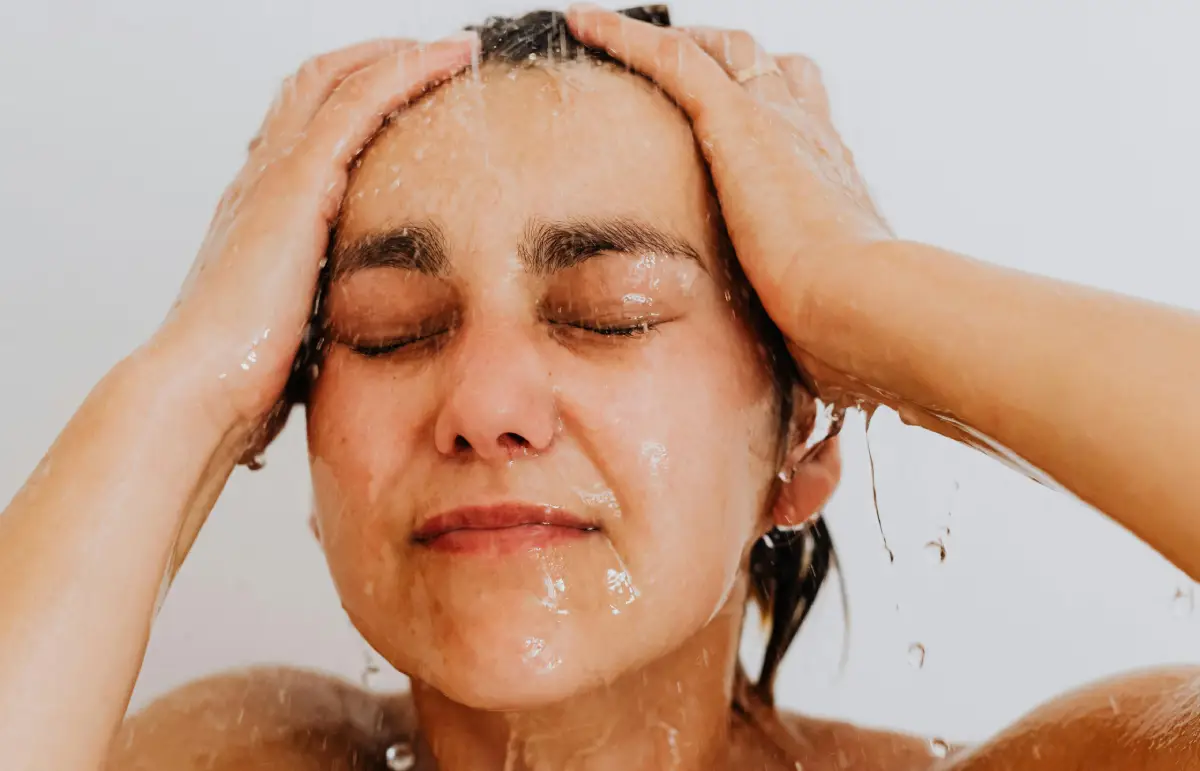
Hard water is water that has high amounts of dissolved calcium and magnesium. The problem is what this mineral stuff does when it meets your skin and your soap. These minerals react with the surfactants in your cleanser or body wash and form a filmy, sticky residue (actually soap scum) that doesn’t wash off. It stays there on your skin after you towel dry, quietly breaking down your skin barrier and making it harder for your skin to retain moisture.
Science calls this increased transepidermal water loss, which is a very unnatural phrase for your skin because water is being lost faster than expected because the barrier is not sealing properly. Think of a healthy skin barrier like good quality cling film over a bowl – moisture stays in, irritants stay out. Hard water basically puts holes in your cling film every time you wash. Over the weeks and months, it continues to grow.
A 2018 study found that skin washed with hard water accumulated significantly more surfactant and caused significantly more irritation than skin washed with soft water. The effect was especially pronounced in people with chronically sensitive or eczema-prone skin. So yes, if you have sensitive skin and you live in a hard water area, get a high quality water softener salt.
So what is water softener salt?
Water softener salt is exactly what it sounds like: salt that keeps doing its job in your water softener system. There is a resin bed inside your water softener tank. Think of it as a kind of mineral magnet filled with sodium or potassium ions. When hard water flows, the calcium and magnesium ions that cause all the problems are attracted to the resin and swap places with those sodium or potassium ions in a process called ion exchange. What comes out the other side is soft water, with the hard minerals removed. Quite simple.
The problem is that the resin bed eventually becomes saturated with calcium and magnesium and stops working. It’s basically full. Only then does the system regenerate, flushing out all the minerals trapped in the resin by flowing a saltwater solution through the tank and flushing them down the drain, leaving the resin refreshed and ready to go again. That brine solution is made from the salt in your water softener brine tank. No salt, no regeneration. No regeneration, no cooling water. The salt is not going directly into your water. This is the fuel that keeps the entire ion exchange process going.
benefits of soft water
Cold water cleans. It sounds almost embarrassingly simple but the difference it makes to your skin is real. Without the calcium and magnesium ions in the water reacting with your cleanser and creating that sticky residue, the soap actually rinses off completely. No invisible films, no surface minerals clogging your barrier, no excess dryness accumulated from weeks of rain. For your information, soft water is not a cure for any skin disease. This simply removes the potential source of irritation.
Do water softeners work?
The largest clinical trial ever conducted on water softeners and skin – Soft water eczema test, also known as the SWET test -The industry did not get what it expected. This was a randomized controlled trial, 336 children with moderate to severe eczema, all living in hard water areas, half of them had a water softener installed at home and half of them did not. After 12 weeks, both groups had basically the same amount of improvement. The water softener group had a 20% improvement. The no-softener group improved by 22%. No significant difference. The researchers concluded that they could not recommend water softeners as a treatment for eczema, and that’s it.
Now, that test was asking a very specific and very high-bar question: Can a water softener treat an established moderate-to-severe skin condition? The answer to that specific question appears to be no. But it’s not at all like soft water does nothing for sensitive skin. A recent pilot trial called Softener found that infants in the water softener group who developed eczema had milder cases than infants in the hard water group.Which at least suggests that reducing exposure to hard water early may matter for severity, even if it doesn’t prevent the condition entirely. The honest, unvarnished truth is that if you live in a hard water area and your skin is reactive then a water softener is probably a good fit for you, but it’s a piece of a much larger puzzle, not a magic one.
different types of salt
- black salt It is the cheapest and hardest. It comes straight out of the ground with all its impurities, including calcium sulphate, which does not dissolve well and slowly deposits as sediment in your brine tank. More sediment means more things going wrong, more maintenance, and more unknowns in your soft water. If you have sensitive skin, rock salt is a type of salt that should be avoided. The price is attractive but the compromise is not worth it.
- solar sea salt crystal (including the widely known diamond crystals Solar Naturals) are made by evaporating seawater, which makes them naturally of higher purity than rock salt without being overly processed. Solar salt crystals dissolve well, they are widely available, and they function reliably in most water softener systems. For most people, this is a popular choice.
- evaporated salt tablets Sodium chloride is the purest form that you can put into a water softener. The manufacturing process removes almost all impurities, leaving a very clean, very consistent tablet with minimal insoluble material. This matters in practical terms because fewer impurities means less residue accumulation in your brine tank and less risk of salt bridge. For sensitive skin, high purity is always a safe choice, this is the right type of salt to invest in.
Best choice for sensitive skin
Here’s the thing about standard sodium chloride: it works brilliantly, the residual sodium it leaves in your softened water is really small, and there’s no solid evidence that it irritates the skin in those concentrations. That said, if budget allows, I recommend you go with potassium chloride. Why? It performs the same ion exchange function but swaps hard minerals for potassium instead of sodium. Potassium is an essential nutrient. It does not have any irritating properties on the skin. And for those who want to keep their home water as clean and as close to neutral as possible—whether because of skin sensitivity, concerns about sodium intake, or just because it feels like the right call—potassium chloride is a more gentle, cleaner option. Morton salt is a well-known potassium chloride tablet that is consistently available and performs well in most systems.
The honest downside is money. Potassium chloride costs significantly more per bag than sodium chloride and requires approximately 25% more product to achieve the same softening results. With a larger family having to contend with a lot more water, the difference in price adds up to something you’ll notice. Whether it’s worth it depends on how sensitive your skin is, how much the sodium issue matters to you personally, and what your budget looks like. There is no wrong answer here. Exactly what suits your situation and the needs of your home.
Tips for best results
- Whatever salt you choose, keep the level consistent in your tank. A saline tank that’s constantly half-empty gives you inconsistent regeneration, which gives you inconsistently soft water, which means your skin is getting some benefits some of the time and none of them the rest of the time. Check it regularly, especially if your home has high water usage.
- If you notice that your softener has stopped working properly despite there being salt in the tank, check the salt bridge. – The hard layer sitting on top of salty water that prevents the salt below from dissolving. This is surprisingly common, can be easily fixed with just a little force to break it, and is something that may go unnoticed for several weeks while you wonder why your skin is getting worse again.
- Don’t expect your water softener to do all the work. Soft water removes one category of irritation from what your skin experiences on a daily basis. The skin layer still needs a good moisturizer, still needs a gentle cleanser, still needs you to really take care of it. The softener is a support, not an option.
bottom line
Quick Summary: Of all the best types of salts, the best water softener salt for sensitive skin is a high-purity evaporated tablet if you’re going the sodium chloride route, or pure potassium chloride if you want to keep sodium out of the equation altogether. Either way, prioritize purity, maintain your system, and your skin will quietly thank you (perhaps without you noticing, which is honestly how the best skin care decisions work).
