
I’ve been practicing Pilates for the past decade, and I can say with certainty that it has alleviated my sciatica, rebuilt my post-natal core and allowed me to cross the finish line of five marathons without injury. More than just a core workout, Pilates is designed to make your body move more efficiently with better balance and coordination.
I recently shared a Pilates exercise I work out every day to build a strong and stable core and work on my hip flexor mobilityBut below, I share my steps for strengthening your glutes and hamstrings, as well as building deep core stability and reducing lower back pain. Ready to find out more? read on.
As a reminder, if you’re new to Pilates or you’re returning to fitness after an injury or pregnancy, it’s always advisable to seek personal advice before trying something new.
What is exercise and what are its benefits?
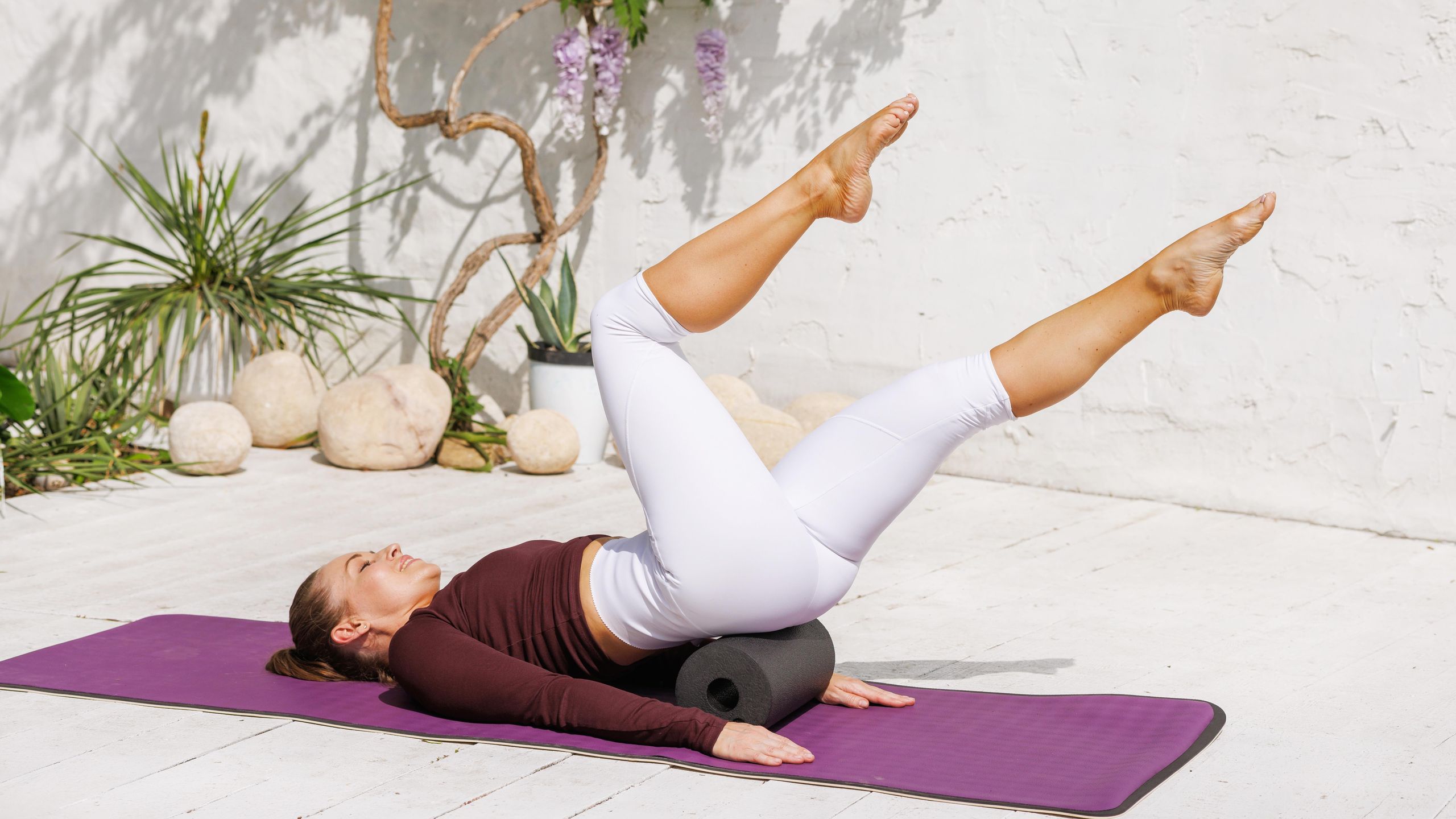
The magical exercise for building strength, improving stability and reducing lower back pain glute bridge march. This exercise looks easy, but it is anything but, and, like all Pilates exercises, the key here is to move slowly and with control.
Glute bridge marches, by nature, target the two largest muscle groups – the glutes and hamstrings. You’ll work the gluteus maximus, medius and minimus, and hamstrings, which are important for walking and running.
Yet after giving birth to my son two years ago my Pilates instructor recommended this exercise to me too, as it is fantastic for working the deep core muscles. You’ll work the transverse abdominals, pelvic floor muscles, and obliques to keep your pelvis stable as you march.
It’s very important to engage your core during this exercise – think of your stomach pulling in and zipping up, as if you’re trying to wear a pair of jeans that’s a size too small.
By working the glutes and core, you’ll protect your lower back from injury and improve the alignment of your hips. It can counteract the effects of sitting for hours and stretch tight hip flexor muscles, improving your posture as well as protecting your spine.
Finally, you’ll increase your hip and pelvic stability during this exercise by focusing on keeping your hips completely stable as you drive one leg and then the other. Whatever you’re training for, this is important.
How to do a glute bridge march
Here’s how to do a glute bridge march with good form:
- Lie on your back on an exercise mat, bend your legs and place your feet flat on the floor.
- Engage your core and pelvic floor muscles, zip them up and in, and drive your lower back into your exercise mat.
- Push through your legs and lift up like a glute bridge, squeezing your glutes at the top.
- Slowly and with control, lift one leg off the floor, keeping it at a 90-degree angle, and bring it toward your chest to tabletop position. Keep your hips as still as possible.
- Slowly and with control, lower your leg back to the exercise mat.
- Repeat on the other side.
- Make sure you complete the same number of reps on each side.
What mistakes should be paid attention to in the form?
As with all Pilates exercises, good form is essential. Here are some form mistakes to watch out for:
hip dips
This is the most common error and it is easy to make. As you lift your leg, make sure your hip doesn’t drop toward the floor – your hips should remain level and lifted throughout the exercise. To do this, you really have to engage your core and glutes. If it’s too hard, start with a regular one glute bridge And prepare for the march.
arching your lower back
Although this exercise should lift your hips, you don’t want to lift them so high that you strain your lower back and flare up your ribs. Think of your core as a solid frame.
using your arms
It’s tempting to put your arms at your sides and use them to push into the glute bridge position, but this reduces the load on your core. If you’re a beginner, place your fingers on the mat next to you for support. As you get stronger, cross your arms across your chest or place your hands on your hips to ensure the movement is coming from your midsection.
move very fast
The slower you go, the harder your glutes and core will have to work during this exercise. Don’t use momentum to lift the leg up and aim to pause slightly at the top before slowly returning your leg to its starting position.
holding your breath
As with all Pilates exercises, your breathing is important here. Don’t be tempted to hold your breath; Instead, use the inhale to lift and the exhale to lower your foot to the mat.
How to proceed with exercise?
Once you’ve mastered this move, here’s how to make it harder:
- Raise your arms toward the ceiling: If you haven’t done so yet, take your arms off the mat and stretch them to the ceiling. This increases the load on your core.
- add volatility: Adding instability to an exercise forces your body to work harder to keep your pelvis stable. To do this, place both feet on the foam roller and march. Alternatively, you can place one foot on a yoga block – uneven height will create a challenge. Finally, if you’re really advanced, place both feet on a Pilates ball and proceed from here.
- Add weight: Adding resistance can help increase the load on the glutes. keep one of these best adjustable dumbbells Place it on your hips and steady it with your hands, or place one of best resistance bands Just above your knees.

to follow Tom’s Guide to Google News And Add us as a favorite source To get our latest news, analysis and reviews in your feed.
