
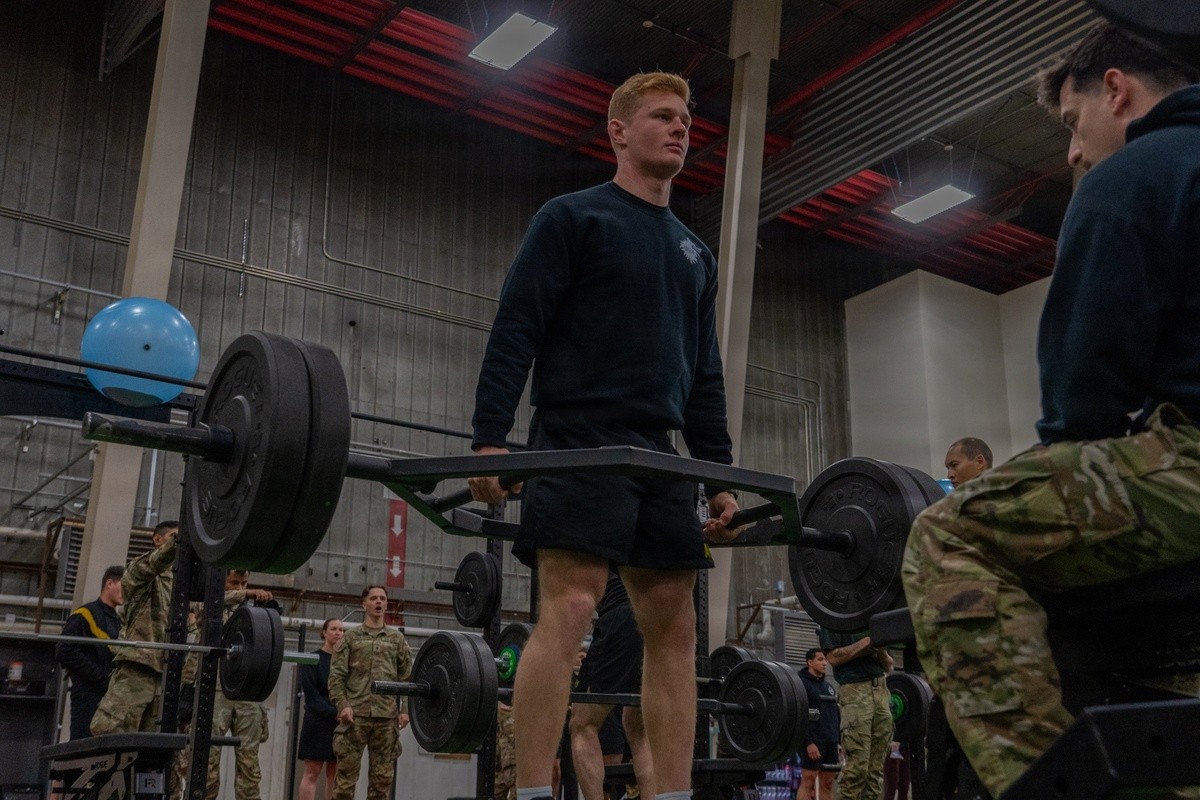
A senior leader from the 1st Brigade, 11th Airborne Division, completes fitness testing during the Functional Rehabilitation of Senior Strategists (FROST) program at Fort Wainwright, Alaska, in April 2026. FROST provides one-on-one health assessments, body composition testing and individualized action plans to majors and first sergeants through the brigade’s overall health and fitness team. (US Army photo)
view original

A senior leader from the 1st Brigade, 11th Airborne Division, completes fitness testing during the Functional Rehabilitation of Senior Strategists (FROST) program at Fort Wainwright, Alaska, in April 2026. FROST provides one-on-one health assessments, body composition testing and individualized action plans to majors and first sergeants through the brigade’s overall health and fitness team. (US Army photo)
view original
FORT WAINWRIGHT, Alaska – The 1st Brigade, 11th Airborne Division’s Holistic Health and Fitness (H2F) team has launched a new initiative aimed at improving the well-being of majors and first sergeants, an often neglected demographic in traditional Army wellness programs.
The program, called Functional Rehabilitation of Senior Strategists (FROST), was implemented in April 2026 and is designed to help senior leaders prioritize their own health. The initiative was conceived by Colonel Christopher Brawley, commander of the 1st Brigade, 11th Airborne Division, who recognized a gap in wellness support for his senior leaders. “Majors and first sergeants spend so much time taking care of their formations that they neglect themselves, which is what makes FROST so important,” Browley said. “The idea was to bring this type of program to our brigade while leveraging our H2F team to take care of leaders who spend all their time focusing on others.”
Brawley took inspiration from two established programs: the U.S. Army War College’s health assessment for students and the Ranger Regiment’s Phalanx program, which is designed to keep Rangers serving longer by quickly addressing medical needs. “At War College, all students have a completed health assessment and I have seen many students choose to make significant lifestyle changes because of it,” said Browley. “Through Phalanx, I personally knew a service member who discovered a significant medical problem that they were able to address.”
This program also adapted from Senior Leader Sustainment at the U.S. Army Sergeant Major Academy. Dr. Ellie Van Luit, H2F program director, said the goal is to “encourage majors and first sergeants to spend a day taking care of themselves and potentially catch health concerns they were unaware of.” Each participant attended a one-day FROST session, with the initiative lasting three weeks following the Joint Pacific Multinational Readiness Center (JPMRC) Rotation 26-02.
During the event, each leader participated in body composition testing, fitness testing and lab work, as well as five one-on-one appointments with licensed providers and H2F trainers. Feedback was based on objective data as well as participants’ self-identified preferences. “This gave them the opportunity to examine their nutritional, physical, sleep, mental and spiritual readiness to support continued service and leadership,” said Angela Hartman, H2F’s deputy mental readiness director. Providers assigned each leader an “action item” to help initiate the desired change, and follow-up appointments or outside referrals were scheduled as needed.
The first iteration of the program saw strong participation, with 41 senior leaders participating. FROST was strategically scheduled in April during the recovery period following an intensive mass training cycle, which concluded with JPMRC Rotation 26-02. Feedback from participants was overwhelmingly positive, with almost all reporting they gained valuable information about their health and well-being and walked away with a clear understanding of next steps. The majority indicated they had already started making changes based on what they learned, while others said they were actively considering adjustments to their routines.
“Frost helped strengthen the relationships between these key leaders and the H2F team to advance H2F integration and principles across the brigade,” Van Luit said.
For the participants, the impact was personal. An anonymous attendee wrote, “As a first sergeant, I spend 100% of my time focused on the well-being of my formation. Frost forces those senior leaders to take a day to focus on themselves and how they need to be better.” Another said, “FROST should be mandatory to show decline, steady state, or increase in overall health at the beginning of coming into the position and at least every six months. If I truly understood that this job could sometimes impact my overall health, I would have adjusted myself a year ago and would not be at this point today.”
Although performance and health changes are still too early to report, the feedback is clear: participants highly recommend completing FROST again. The H2F team plans to hold the program at least twice a year and is currently gathering feedback from the initial pilot to inform and support its ongoing implementation for all new incoming brigade leaders.
