
Last updated on May 14, 2026 by Giorgia Guazarotti
I wonder what effect Botox does on your expression beyond the obvious “face stops moving” part? People have been getting Botox for decades, mostly to soften frown lines or smooth out forehead wrinkles that make them look stressed even when they’re perfectly happy, and the entire conversation has basically been at the level of “it smoothes wrinkles, it lasts three months, here are the potential side effects, bye.” Which is fine. But it’s also like explaining what a hurricane is and stopping at “the sky gets wet.” There’s a lot more going on. In this article, we’re going to learn what Botox is really doing – not just to your wrinkles or facial expressions, but to your brain, your emotions, and oddly enough, your ability to understand other people’s emotions. And no, I’m not being dramatic. That’s where the science really goes.
What is Botox actually doing to your face?
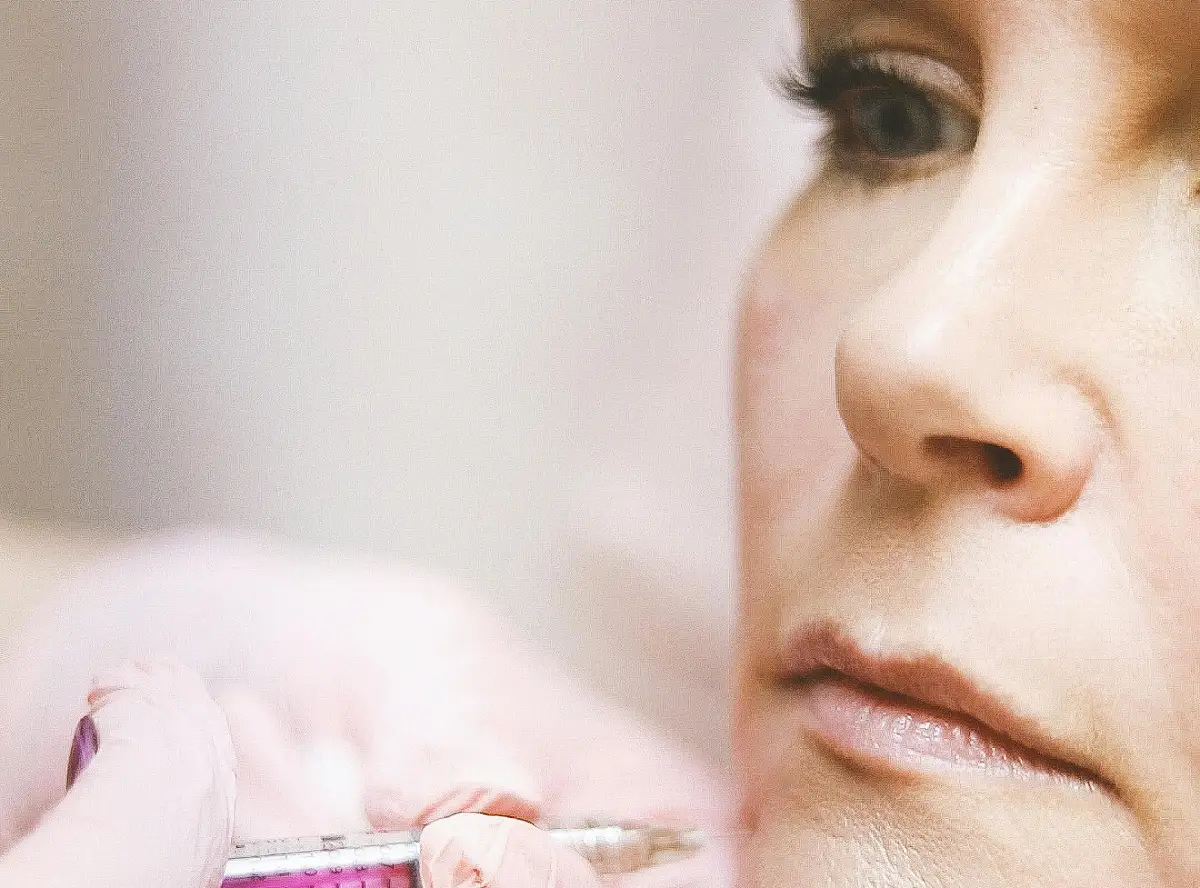
Botox is a brand name. The actual substance is botulinum toxin type A, which sounds horrible and is extremely dangerous in large doses. But it has been used safely for decades in small controlled doses used in cosmetic treatments. What it does is block the chemical messenger (acetylcholine, if you want the term) that tells your muscles to contract. So when it’s injected into, say, the muscles responsible for arching the eyebrows (which create the vertical lines between your eyebrows) those muscles can no longer contract completely. The nerve sends a signal, the signal goes nowhere, the muscle remains still, the skin over it stops contracting. Therefore the appearance of wrinkles reduces. No movement, no folding.
It is used in small amounts on the orbicularis oculi muscles around the eyes for crow’s feet, on the frontalis muscles across the forehead for horizontal lines, and in many other places depending on one’s desire. The paralysis caused by Botox treatment is temporary. This usually lasts between three to six months, before nerve function gradually returns and the muscles begin to work again.
Connected: How to Fix a Crooked Smile with Botox
The facial feedback hypothesis: how your face and brain talk to each other
Here’s something that Charles Darwin (yes, that Charles Darwin!) was already thinking about in the 1800s. He observed that facial expressions were not solely the result of emotions. It seems to be part of how we experience emotions. As such, emotion and face were just not correlated. They were feeding each other in a loop. This idea eventually became what scientists now call the facial reaction hypothesis. The basic idea is this: Your facial movements send information back to your brain that helps regulate your emotional state. When you smile, your brain gets a little signal that something positive is happening. The same thing happens in the opposite direction when you furrow your eyebrows. Expression of feelings reinforces the feeling.
Researchers have tested this in some really creative ways. A study found that people keep pens between their teeth (which forces a kind of smile) or between their lips (which prevents a smile), and then asked them to read sentences with emotional content. People who were accidentally forced to smile slightly processed the happy sentences faster. Their brains were primed for positive emotional content by receiving a mild “we’re smiling” response from the face. It turns out that Botox is the perfect casual tool to test if it’s actually real. Because it very specifically and temporarily shuts down one set of muscles while leaving everything else intact. Scientists basically looked at it and said: Oh, we can use this.
Botox and brain activity: what fMRI scans really show
A 2023 study published in Scientific Reports Took ten women who were receiving cosmetic BTX treatments anyway, injected them into their shrunken muscles, and then scanned their brains while viewing pictures of happy and angry faces. Once before the injections, once two weeks later when the Botox was fully active. They found that after the injection, brain activity in the amygdala (the part of your brain that is most directly involved in processing emotions) increased. After Botox, brain activity in the amygdala increased. The brain, cut off from its normal facial response, was working harder to understand the emotional faces it was seeing. But working harder doesn’t mean doing it better. Other studies measuring real-world outcomes found that people were significantly worse at reading other people’s emotions after Botox injections, Which suggests that additional efforts are not able to fully compensate for what the paralyzed muscles can no longer convey to the brain.
An earlier study found something similar: When participants taking Botox were asked to mimic angry expressionsBotox significantly reduced activation in both the amygdala and the brainstem (the brain regions most deeply associated with emotional experience). The researchers concluded that this was evidence that the amygdala is directly sensitive to facial feedback. Meaning: Your face is not just a display screen of your emotions. It is an active input into the system.
Botox and Social Situations: How It Affects Your Ability to Read Other People’s Emotions
Did you know that we read other people’s emotions partly unconsciously by copying them? When someone smiles at you (like a real, genuine Duchenne smile that reaches the eyes), your face returns a small, imperceptibly subtle version of that smile. You are not aware of this. It just happens. And that little mimicry is part of how your brain figures out what the other person is feeling. It’s like your face is doing instant translation: Let me try this expression for half a second and see how it sounds, so I know what it means.
The Botox procedure disrupts this. A study from USC and Duke found that people who received Botox injections had a decreased ability to tell what other people were thinking and feeling. Decreased ability was specifically tracked with loss of facial response. Because the injected muscles could not participate in that unconscious imitation, the brain was working with less information. One of the researchers put it with a kind of depressing irony: “People use Botox to function better in social situations. You may look better but you may suffer because you can’t read other people’s emotions as well.” Ironic, right?
A 2018 study in Scientific Reports tested this with an appropriate control group and found that BTX-treated participants showed significantly lower emotion recognition ability than comparison participants. one 2010 The study also added something unique: After Botox in the eyebrow muscles, people took significantly longer to process angry and sad sentences. – but their processing of happy emotions was completely unchanged. Because the muscles that contract the eyebrows were paralyzed, but not the muscles involved in smiling.
I want to be clear: If you’ve had Botox this is not a reason to panic. The effects are temporary, they correspond to when Botox is activated, and they are reversible when muscle movement returns. But this is an interesting thing that no one warns people about.
The Flip Side: Botox and Depression
While all this is going on, there is also strong evidence that Botox has legitimate antidepressant effects. Multiple randomized controlled trials have tested whether specifically treating the glabellar frown muscles can improve depression symptoms. A double-blind placebo-controlled trial found that the same treatment for wrinkled muscles led to significant, sustained improvement in depression in patients who had not adequately responded to antidepressant medication.. A A meta-analysis of pooled results from five different RCTs showed that Botox patients showed significantly greater improvements in depressive symptoms than placebo patients..
The mechanism is that same feedback loop, working in your favor. If you are physically unable to furrow your brows deeply, your brain receives less of the muscle response associated with negative emotions. The loop that normally reinforces bad mood becomes disrupted. It is sometimes called a “depot antidepressant” because a treatment lasts three to four months.
But there’s a problem here – and it’s important. The effect depends entirely on which muscles you are treating. One study found that treatment of laugh lines was specifically associated with an increase in depression scores. Because when you paralyze the muscles associated with expressing positive emotional reactions, you potentially cut off some of the positive feedback those expressions send back to your brain. You smile less openly, your face communicates less happiness to your emotional processing system, and your mood worsens. The same mechanism points in the other direction.
So the emotional effects of Botox are not uncommon. They are specific to the muscles you are targeting. Roasted muscles: Potentially helpful for mood. Smiling muscles: possibly the opposite. There’s an excellent argument for knowing your facial anatomy before deciding how much Botox you need and exactly where.
bottom line
The research here is really preliminary: fMRI studies tend to have small sample sizes, future research will tell us a lot about individual differences and whether these effects actually appear in real everyday social interactions or only in controlled laboratory conditions. Emotional processing changes are temporary. This isn’t a “Botox is secretly destroying your empathy” situation to get a younger look.
But it’s a good argument to have a real conversation about the psychological effects of Botox before committing to this cosmetic treatment. Not just “here are the side effects” boilerplate, but a real discussion about what you want from it, what specific muscles you’re treating, how much movement matters to you, what natural expressions you want to preserve. The amount of Botox and injection site are not a one-size-fits-all decision. Your face is not a passive surface. It’s part of how you feel things and how you understand other people. It’s quite extraordinary if you think about it.
