
Last updated on March 12, 2026 by Giorgia Guazzarotti
Chemical Peel vs Facial: Which One is Right for Your Skin? It is possible that you have had dark spots on your cheeks for two years and nothing is removing them. Perhaps it’s that rough texture that looks good in your bathroom mirror and then completely betrays you in natural light. Maybe you’re tired of spending money on products that promise everything and deliver a buzz. And now you are wondering which of these facial treatments will improve the appearance of your skin with minimum time. So here it is: what each treatment actually does, what the research supports, and how to figure out which one your skin really needs right now.
What is a facial and what are its different types?
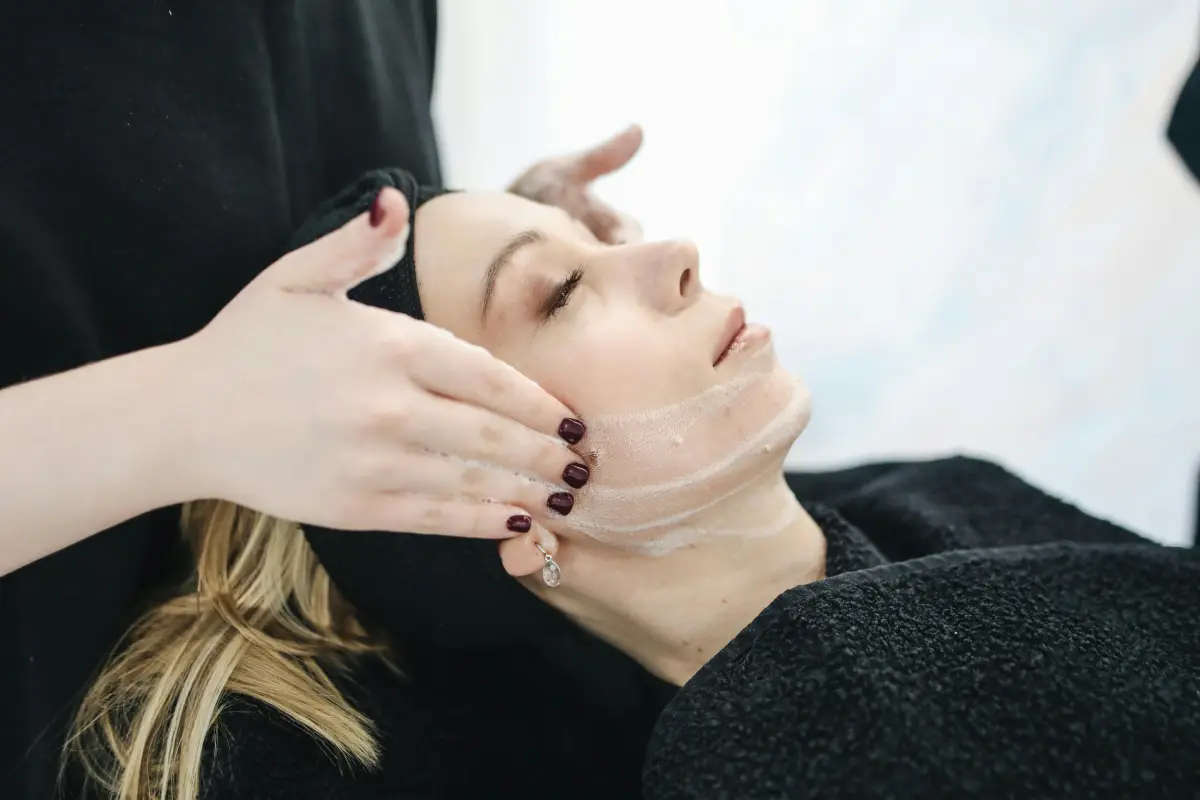
A facial is a multi-step skin treatment performed by an aesthetician and the basic framework is always almost the same: thorough cleansing of the skin, some form of exfoliation, removing blackheads if necessary, a mask, moisturizer, is done. Quite simple. Except you look at an actual treatment menu and there are fourteen different facials with names like “Radiance Revival” and “Urban Detox Glow” and suddenly you have no idea what you’re looking at. So let’s cut it. The type of facial matters because different facials are actually doing different things on your skin.
- A classic or basic facial It’s exactly what it sounds like. Deep cleansing, manual removal of blackheads and congestion, hydration, maybe a calming mask. This is maintenance. It keeps your pores clear, your skin surface healthy, and brightens your complexion. It will not heal your acne scars. It was never trying.
- an enzyme facial Uses proteolytic enzymes (usually from papaya or pineapple) to dissolve the proteins that hold dead skin cells together on the skin’s surface. It’s gentle, it doesn’t go deep, and it’s really lovely for sensitive skin that gets irritated at the mere suggestion of acid. The exfoliation is real, the results are mild, and if you leave glowing it’s because your skin wasn’t once pressured into rebellion.
- AHA or Glycolic Acid Facial This is where the line between “facial” and “chemical peel” starts to blur – because when alpha-hydroxy acids are used in the exfoliation step on the face, it technically provides a superficial chemical peel treatment. The difference is in the concentration and pH of the acid. In day spas, 5-8% glycolic acid can be used at a relatively high pH for a glowing face. A clinical peel uses it at a much lower pH, at 30-50%, and those two things are not the same. Glycolic acid at clinical concentrations has a really strong evidence base for hyperpigmentation, fine lines and photoaging – It is a documented first-line treatment for melasma in the dermatology literature. The spa version is the cousin. A friendly, mild-mannered cousin who doesn’t change much.
- a hydrafacial is a device-based treatment that combines cleansing, gentle exfoliation via a vortex tip, vacuum extraction and serum infusion all in one. It seems like a gimmick until you look at the clinical data, and then it gets a little more interesting. A multicenter study found that six biweekly HydraFacial treatments increased the proportion of patients with clear or almost clear acne from 20% to 65% at 12 weeks.. a separate Randomized controlled trial found measurable increase in epidermal thickness, reduction in pore size and reduction in fine lines in the treated group – Without the device, applying the same serum manually did not show any detectable changes in the skin. Both studies are small, and the author of one was affiliated with the company, so keep that in mind. But the data is there, which is more than you can say about most facials.
- an ipl photofacial Uses intense pulsed light to target pigmentation and redness at a deeper level than any topical treatment. It’s in a category of its own – less about exfoliation and cell turnover, more about eliminating melanin clumps and broken capillaries that cause uneven skin tone and redness. If sun damage is your main concern, it’s worth a serious conversation with a physician.
Connected: My Full HydraFacial Review
What is a chemical peel and what are the different types?
A chemical peel is a treatment in which a chemical solution is applied to the skin in a high enough concentration to cause controlled exfoliation (and, depending on depth, controlled bruising). This sounds worrying. It’s not like that. The “injury” is the issue, because it is the wound healing response that triggers collagen production and leads to actual structural improvements in your skin, not just a youthful glow. The types of chemical peels break down by depth, and depth determines everything: what concerns it can treat, how much downtime you’re signing up for, and what results you can realistically expect.
- Superficial peels work on the outer layer of the skin. The usual players are glycolic acid, lactic acid, mandelic acid, and salicylic acid – all in concentrations that accelerate cell turnover without breaking down the skin barrier. Downtime is minimal, maybe a day with light sensitivity and some light peeling. Especially for acne-prone skin, salicylic acid is what you want — it’s oil soluble, which means it penetrates the lining of the pores in a way that water-soluble acids physically can’t, and Research shows that it gives better sustained results with fewer adverse effects than glycolic acid for acne. For pigmentation and photoaging, glycolic acid at 30-50% is your workhorse.
- medium depth peels Use trichloroacetic acid, usually 20-35%, and they go further – into the upper skin. This is where you start to get real collagen remodeling, not just faster cell turnover. Histological studies on TCA peels have shown measurable increases in dermal thickness, higher glycosaminoglycan levels, and visible rearrangement of collagen and elastic fibers after treatment.. Your skin is rebuilding itself structurally. That’s why the results last longer and look unlike anything you’ll get from a superficial peel or facial. However, the downtime is real – expect several days of peeling and redness, and a week or so before you feel like you made an excellent decision.
- deep peels Using high-concentration TCA or phenol is the most intensive option and really isn’t something that can be booked on a whim. They are reserved for the presence of significant sun damage, deep lines, or scars that do not respond to anything else. The results can be remarkable. Recovery is serious, the risk of post-inflammatory hyperpigmentation (dark spots) is especially real in people with darker skin, and it is a process that requires proper medical supervision. Full stop.
So which one do you really need?
If you have specific skin concerns—dark spots, acne scars, rough texture from sun damage, fine lines that have crossed the line from “okay” to “really bothering me”—a clinical chemical peel will get you there faster than a facial. The mechanisms are understood, the depth is controlled, the results of pigmentation and photoaging are documented. You’re not hoping for the best. You’re dealing with something that has a real evidence base and a clear mechanism of action.
If your skin is in good shape and you really want regular maintenance – clear pores, hydration, that feeling of healthy glowing skin, staying on top of cell renewal so things don’t get worse – professional facials are a really good option. Monthly facials may not replace the way you peel your skin, but they support your overall skin health, they’re suitable for sensitive skin that can’t handle clinical-grade acids, and when you take into account the relaxation component, they’re doing something for your nervous system that a chemical peel absolutely isn’t.
The most honest thing is that these are not rivals. Many people who get the best results are doing both (peels for structural work, facials for maintenance) at different intervals and for different reasons.
bottom line
The truth is, no one treatment is universally better – they’re just made for different jobs. A chemical peel works on what’s really bothering you: pigmentation, texture, scars, damage that’s been sitting there ignoring everything you throw at it. Facials keep your skin healthy, happy and healthy. Some people need one. Some people need others. Honestly, a lot of people need both. The best thing you can do is stop the guessing and go to a skin care professional who can really look at your skin and tell you what it needs. Because the right treatment for your skin isn’t what works for someone else – it’s what’s right for you.
