
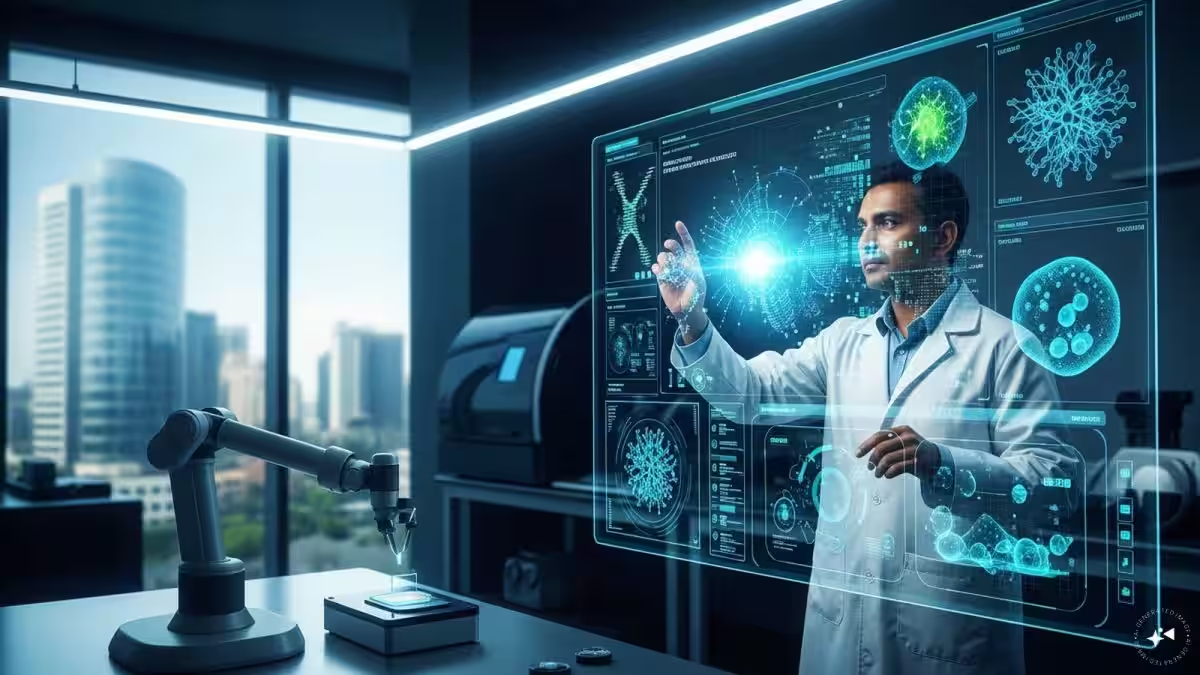
India’s diagnostic sector is undergoing rapid transformation as artificial intelligence (AI) and digital technologies begin to overcome long-standing shortcomings in early disease detection. With the increasing burden of chronic diseases and shortage of specialists, healthcare providers are increasingly turning to automation, data analysis, and predictive tools to improve outcomes and expand access.
Expert shortage, increasing disease burden prompt adoption of technology
Dr. Anand K, CEO and MD, Agillus Diagnostics, said that the integration of technology is fundamentally reshaping early disease detection in India, especially in the face of an acute shortage of specialists.
“In a country of over 1.4 billion people, one of our biggest healthcare challenges is the acute shortage of specialists. For example, India is facing a shortage of approximately 15,000 radiologists, leading to significant delays in diagnosing serious conditions. AI enabled interpretation tools can play a vital role in supporting physicians by faster analyzing X-ray images and reducing diagnostic bottlenecks.”
He highlighted that early detection has become important as chronic diseases – especially cardiovascular diseases – are responsible for about 28% of deaths in India. Many cases worsen due to delayed diagnosis, but timely screening and technology-driven interventions can significantly improve outcomes.
Technology is also helping to bridge the urban-rural health care gap. He said, “About 65-70% of India’s population lives in rural areas, where access to specialist care and advanced clinical infrastructure is limited. Digital platforms, telemedicine and tech-enabled laboratory networks are bridging this divide.”
Dr. Anand K also pointed to the growing role of predictive healthcare. By analyzing medical records and imaging data, AI can identify high-risk individuals even before symptoms appear, marking a shift from reactive treatment to proactive prevention.
Digital Labs cuts turnaround time, increases efficiency
The rise of digital laboratories is accelerating this change. Dr Shalini Singh, Director of Lab Operations at Ampath, said the diagnostic sector is witnessing a major shift from manual workflows to automation-based systems.
“Traditionally, laboratory workflows have relied heavily on manual intervention at multiple stages, from sample processing and testing to validation and report generation, often resulting in longer work hours,” he said.
With automation and AI-powered analysis, laboratories are now able to process higher volumes of tests more efficiently while maintaining quality standards. “Automated sample management, integrated laboratory information systems and intelligent data analysis tools allow high volumes of tests to be processed with greater efficiency,” he said.
A major benefit has been faster report delivery. “In many cases, results that previously took several days can now be delivered within hours. This is especially important in clinical scenarios where timely diagnosis directly impacts treatment decisions,” he said, citing cardiac markers, infection panels and vital blood tests.
Dr. Singh also stressed the importance of preventive health care. He said, “India is witnessing a significant shift from reactive to preventive healthcare, but there is still a long way to go. We strongly advocate annual clinical check-ups as a proactive step towards early diagnosis and better health outcomes.” He said regular testing can help detect conditions like diabetes, heart diseases and some cancers at an early stage.
AI complements, not replaces, traditional diagnosis
Experts emphasize that AI is changing diagnosis, but it is not a substitute for clinical expertise. Dr. Manish Bagai, Chief Operating Officer, Ampath, said AI should be seen as an enabler rather than a replacement.
He said, “Artificial Intelligence is not a replacement for traditional diagnostics; rather, it is a powerful enabler that increases the accuracy, efficiency, and predictive power of modern laboratories.”
AI systems can analyze large datasets, patient histories, and biomarker patterns at a scale that manual processes cannot match. This helps identify subtle variations that may indicate early disease onset, especially in areas such as oncology screening, metabolic disorders and cardiovascular risk profiling.
However, Dr. Bagai emphasized that technology works best alongside human expertise. “AI works best as a decision-support tool that strengthens clinical judgment while improving consistency and reducing human error,” he said.
As India’s healthcare ecosystem evolves, the integration of AI with traditional diagnostics is expected to play a significant role in advancing preventive healthcare and improving access to early detection.
end of article
